

4WD tracks – Australia’s remote outback is really unforgiving. Tracks like the Canning Stock Route, nearly 1,800 kilometres of WA desert ruts and dunes, or the Gibb River Road across the Kimberley will expose every weakness in your preparation within hours. A capable 4WD is the starting point, not the finish line.
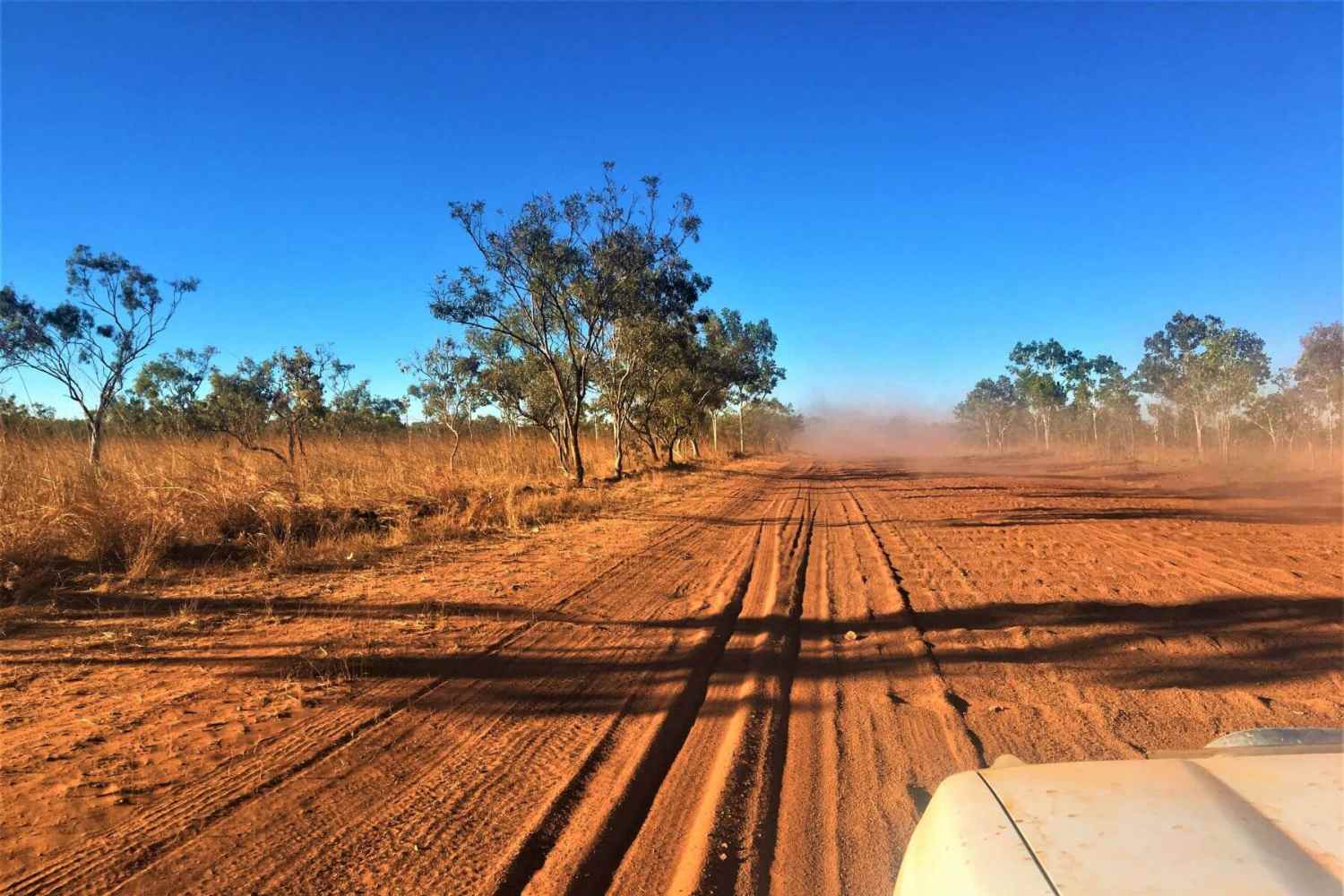

The distances alone make self-sufficiency non-negotiable. You’re responsible for your own fuel, water, food, and recovery. There’s no roadside assistance in the Simpson Desert, and the nearest town on the Anne Beadell Highway can be hundreds of kilometres away.
Remote 4WD tracks that punish underprepared rigs
Serious tracks demand serious vehicles. Upgraded suspension, all-terrain tyres, and roof-mounted or long-range fuel tanks are baseline requirements for anything beyond a weekend fire trail. Tracks like the Madigan Line, with over 1,100 similar dunes, will destroy standard road tyres before you reach halfway.
Permits also matter. The Munga-Thirri National Park crossing requires prior authorisation, and some tracks close entirely after heavy rain. The Old Tele Track in Cape York turns its notorious mud sections into near-impassable traps once the wet season arrives. Knowing seasonal conditions before you depart is essential.
Recovery gear most 4WD owners overlook
A snatch strap and a shovel are well-known. What many overlook are the less glamorous items. This includes a quality tyre repair kit, a portable air compressor, rated shackles, and a tree trunk protector for when there are no trees nearby. Travelling without a high-lift jack on technical terrain is a gamble that rarely ends well.
For those who camp and unwind online during extended trips, connectivity habits have shifted considerably. Travellers planning multi-week outback adventures increasingly rely on satellite communicators and offline-capable apps.
Those who enjoy casual online entertainment also gravitate toward mobile-first platforms, such as crypto Casinos in Australia, for instance. These platforms have grown popular among travellers who prefer pseudonymous, flexible payment options when they have occasional satellite access.
How serious travellers fill downtime off-grid on 4WD tracks
Evenings on remote tracks have a pace all their own. After airing tyres back up, cooking dinner, and checking the next day’s GPS waypoints, most experienced travellers read, listen to downloaded podcasts, or simply sit by the fire. The silence of the outback is part of the drawcard; it’s worth embracing rather than filling with screen time.
Satellite communication devices have changed how connected off-grid travellers feel. Connectivity expectations among regional and remote Australians have changed significantly, with more people expecting usable digital access even in remote areas.
Knowing your rig’s limits before you leave
Pre-trip preparation should include a thorough mechanical inspection, diff oils, coolant, belts, and brake pads all need checking. Spares like a full-sized spare wheel, radiator hose, fan belt, and fuses cost almost nothing relative to a recovery bill or a night stranded on the QAA Line.
The Automobile Club of Australia and similar motoring bodies consistently emphasise that trip registration with a responsible person or authority is non-negotiable for solo travellers.
Understanding terrain maps and your vehicle’s ground clearance relative to track conditions can mean the difference between a successful crossing and a serious incident. Know your rig, respect the track, and you’ll come home with stories worth telling.