

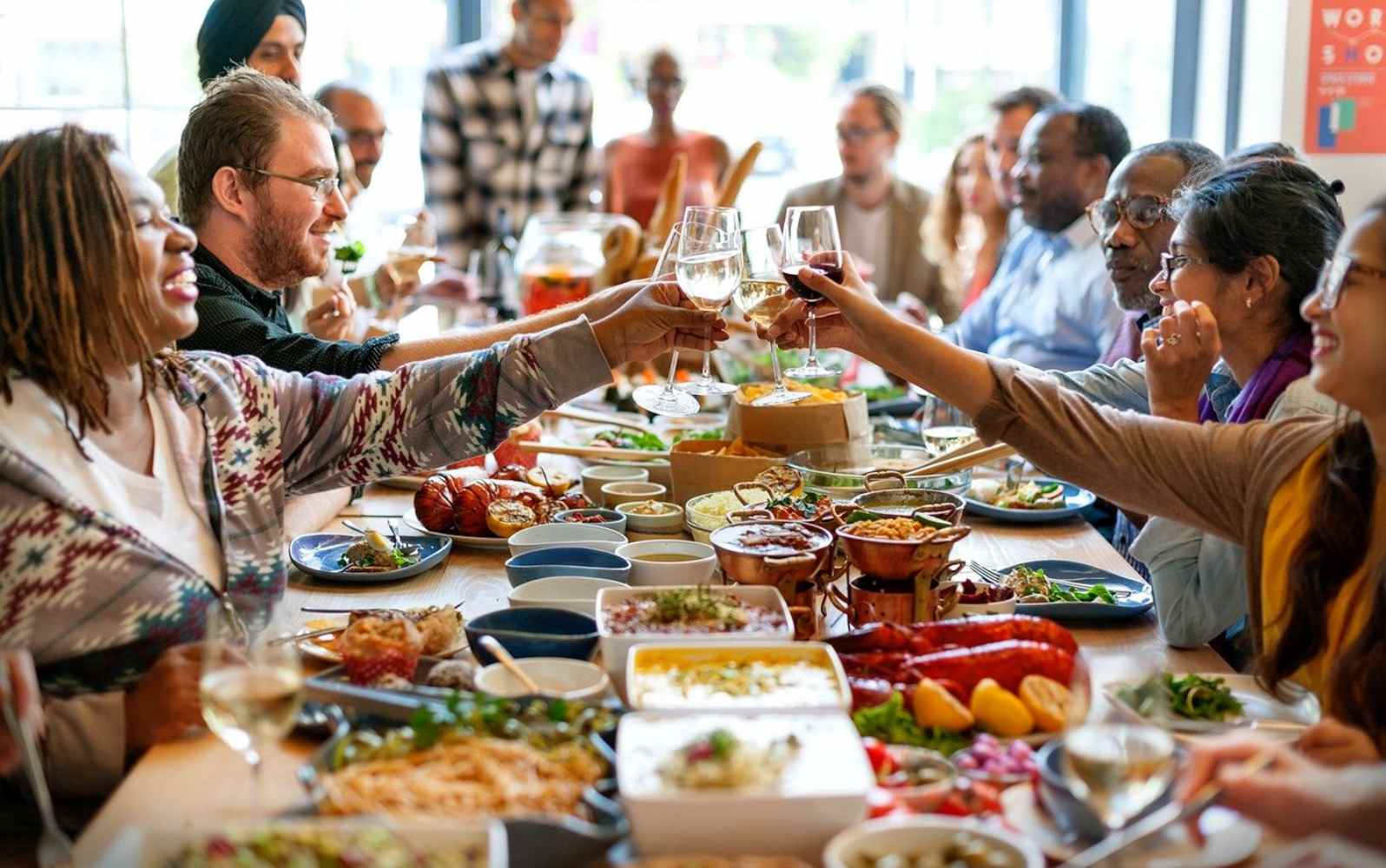
Meet Singles – At 8 in the evening in a hostel kitchen in Porto, 11 people who arrived separately are cooking one meal because somebody bought too much fish. Two of them will still be talking at 1 in the morning. Nobody swiped and nobody wrote a profile. A shared table and a surplus of seafood did all of it.

Meeting people abroad without an app is a question of picking situations with the right structure. The structure that works has 3 features. It puts the same people together for more than one hour, it gives them something to do besides talk, and it makes leaving early slightly awkward.
Hostel Common Rooms and Communal Kitchens
Hostels stopped being exclusively for 22-year-olds some time ago. Around 13% of hostel guests are over 45, roughly 9 in 10 properties now offer private rooms alongside dorms, and 1 in 5 people choosing accommodation say the social side is the deciding factor.
Staying in hostels at 45 works on one specific model. Book a private room with a communal kitchen attached. The privacy problem disappears and the social side stays. A hotel room offers privacy and nothing else.
Small-Group Tours
More than half of Intrepid’s customers book alone, and their groups average 12 people. G Adventures reports around 35% of its clients travelling solo. A 12-person group over 8 days produces forced proximity with strangers who have already selected themselves for a similar taste in holidays.
The demographics are worth knowing before booking. Roughly 71% of solo tour bookings are women, and interest keeps climbing, with women planning to vacation alone up 8 percentage points in a single year. A man booking a small-group tour in his forties is entering a market where he is scarce.
The operator matters more than the destination for this purpose. A 12-person trip with shared transport and shared meals produces a group. Run the same itinerary with 40 people, hotel rooms and free evenings and you get 40 individual holidays happening in parallel. The itinerary page usually states the maximum group size, and that number predicts the social outcome better than the country does.
Cooking Classes and Market Tours
Culinary tourism is now one of the fastest-growing parts of the travel industry, and about 75% of tourists rate food as a serious factor in where they go. The practical result is that every city of any size runs a morning market tour followed by a 4-hour cooking class, and those classes are full of people who came alone.
The format is close to ideal for anyone who dislikes small talk. Everyone has a knife, a station and a task. Conversation happens sideways while chopping, which removes the direct pressure of a face-to-face introduction, and at the end there is a meal that everybody eats together. 4 hours of that produces a better read on a person than 3 drinks would.
Multi-Day Courses and Certifications
A 4-day scuba certification, a week of surf lessons or a mountain skills course puts the same 8 people in the same place every morning. Repetition does the work here. The second day is when people stop being polite, and the fourth is when plans get made for the evening.
These courses attract every kind of traveller in the same room. Honeymooners, 2 friends splitting a room, people who travel with a sugar daddy or with a partner 20 years older, a retired couple on their fortieth trip, and a considerable number of people who came alone and said so on the booking form. Nobody explains their situation at breakfast. Nobody asks either.
Coworking Spaces and Shared Desks
More than 50 million people now work independently of a fixed location, up from about 35 million in 2023, and 42,000 coworking locations operate worldwide. Remote workers have concentrated themselves into a short list of cities since 2020, and the shared desk is where they overlap. For a travelling adult it is the closest available substitute for a workplace social life.
The 15% of remote workers who deliberately choose coworking spaces over a rented flat give networking as the reason, and the social benefit is a side effect of the same thing. A monthly desk in Lisbon or Mexico City buys the same 20 faces every day for 4 weeks. Most such spaces run a Thursday drinks night, which functions as an office party for people who do not have an office.
Volunteering and Work Exchanges
2 weeks on a farm, a hostel reception desk in exchange for a bed, a conservation project. The screening is severe and useful. Anyone who signs up for 6 hours of unpaid labour a day has already demonstrated something about their character. And the people met that way are rarely the ones met at a beach bar.
The shared-hardship effect is real and slightly unfair. A group that has spent 2 weeks doing something mildly unpleasant together will form faster bonds than a group that spent the same 2 weeks enjoying itself. Farm placements and hostel work exchanges also run for weeks rather than days. Which solves the problem that ends most holiday acquaintances, namely that one of the 2 people is on a flight on Thursday.
Running Clubs, Gyms and Local Sport
Nearly every city of a decent size has a free weekly running event, a climbing gym with a Tuesday social A padel court with an open ladder or a football game that needs a spare body. These are local by definition. That is the point. A traveller who wants to meet residents rather than other visitors has to go where the residents already are on a Wednesday.
Turning up 3 weeks running is the whole method. The first week is a face, the second is a name, and by the third somebody suggests a drink afterwards. This is the one option on this list that requires staying somewhere long enough to be recognised. Which rules it out for a 10-day trip and makes it the strongest option for anyone spending a season in one city.
Back in the Kitchen in Porto
The 11 people around that table had no plan. They booked beds in the same building on the same night. One of them overbought at the market, and dinner followed from those 2 facts. Every situation described here works the same way. Put the same people in the same room more than once. Give them a task, and remove the obligation to be interesting on demand.
The fish, for the record, was overcooked, and nobody left the table before midnight.