

Sooner or later, most Australian road trippers start thinking about the Big Lap. The idea has a certain pull: hitch up the caravan, point the car towards the horizon, follow the highways that circle the country, and knock off all its hidden gems.
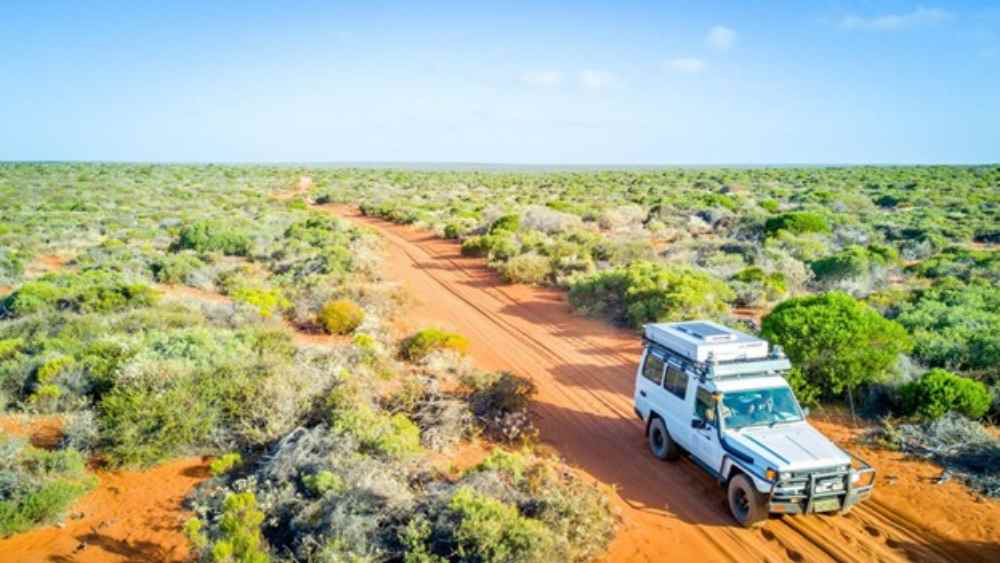

It all sounds straightforward until you take a proper look at the map and realise just how vast Australia actually is, with long stretches of road linking landscapes that can feel worlds apart. Depending on the route and the number of detours you take, the journey can easily stretch beyond 15,000 kilometres.
Trips like this tend to reward travellers who prepare properly. Packing for a journey this long is not about filling the vehicle with as much equipment as possible. Instead, it is about choosing the items that quietly make life on the road easier, whether that means keeping food fresh, navigating remote regions or dealing with the occasional mechanical hiccup along the way.
Protecting your car or caravan from Australia’s climate
Vehicles that spend months outdoors across different climates inevitably incur some wear, particularly when exposed to intense sunlight, dust storms, and sudden rain. Over time, these elements can gradually affect paintwork, seals and external fittings.
Many first-time travellers also underestimate how tough the Australian climate can be on vehicles and caravans. During longer stops, experienced caravanners often rely on caravan covers to shield their vans from harsh sunlight, dust and debris while parked. Over the course of a trip that can last several months, simple protection like this can help keep a caravan in good condition as it moves between dramatically different environments.
Protective gear helps reduce some of that exposure, especially when caravans remain parked for extended periods. Shade awnings and protective covers are commonly used by travellers spending several days in one location, allowing them to protect their equipment while exploring nearby areas. Travellers covering thousands of kilometres quickly realise that a little protection early on can prevent far more serious wear later.
Navigation tools that still work when reception disappears
Modern navigation apps are incredibly useful, but they are not always reliable once you move into remote areas of the country. In large parts of Western Australia, inland Queensland, and the Northern Territory, mobile phone reception can disappear quickly, leaving travellers without the maps they expected to rely on.
For that reason, many travellers turn to camping and travel apps designed specifically for long-distance road trips. Platforms like WikiCamps Australia help travellers locate campsites, water points, dump stations and fuel stops scattered across the country, which becomes particularly useful when travelling through unfamiliar regions.
Even so, experienced road trippers often keep a physical road atlas tucked somewhere in the vehicle. It might feel slightly old-fashioned, but when you are crossing the Nullarbor or navigating unfamiliar outback highways, having a map that works without batteries suddenly becomes reassuring.
Recovery gear for unexpected road conditions
Australia’s major highways are generally in good condition, but many memorable places sit at the end of gravel roads or dusty tracks that require a bit more preparation. Corrugations, loose gravel, and sandy stretches are all part of the experience once you start exploring beyond the main routes.
Because of this, many travellers carry a small recovery kit so that minor issues do not turn into major disruptions. Items such as a tyre repair kit, portable air compressor and traction boards can make a huge difference if you find yourself dealing with a flat tyre or soft ground far from the nearest town.
Drivers heading further into remote regions often bring a UHF radio as well, particularly because these radios allow communication with other vehicles sharing the highway, including road trains. On narrow outback roads where visibility can be limited, that kind of communication adds an extra layer of safety.
A simple but reliable camp kitchen
After a few weeks on the road, cooking your own meals becomes part of the natural rhythm of travel. Roadhouse meals can be convenient from time to time, but relying on them every day soon becomes expensive and repetitive.
Most travellers keep their camp kitchen simple and practical, packing just enough equipment to prepare a wide range of meals without taking up too much space. A portable gas stove, a couple of sturdy pots and pans, and a handful of utensils are usually more than enough for daily cooking.
Many caravanners also bring a small barbecue plate so meals can be cooked outdoors, which often becomes one of the most enjoyable parts of the day as the temperature drops and the evening settles over the campsite.
Water and food storage for long stretches of road
Water planning becomes increasingly important the further you travel from major towns. In remote areas, petrol stations and supply stops can be hundreds of kilometres apart.
For this reason, travellers often carry additional water beyond what their caravan tanks hold. Keeping an extra 20 to 40 litres on hand is a common precaution for longer remote stretches.
Food storage is equally important. Portable fridges have become a staple of modern road travel, keeping food fresh far longer than a standard esky filled with ice. This allows travellers to stock up on groceries when passing through larger towns rather than relying entirely on small roadside stores.
Small tools that solve big problems
Even well-maintained vehicles encounter the occasional issue during long road trips. A loose screw, a blown fuse or a small repair can quickly interrupt a day’s travel.
A compact remote toolkit helps solve many of these problems without needing to find the nearest mechanic, which may be hours away in remote areas.
Many travellers carry a small kit containing:
- adjustable spanners
• screwdrivers
• duct tape
• zip ties
• spare fuses
• electrical tape
These simple tools often prove surprisingly useful during long journeys.
The Big Lap, done right!
Driving Australia’s Big Lap is less about rushing from one destination to the next and more about settling into the pace of the road. Landscapes shift dramatically from one region to another. One moment you might be watching waves roll in along a quiet stretch of coastline, and the next you are following a highway that disappears into the red horizon.
Packing thoughtfully simply makes that experience easier. Reliable navigation tools, practical cooking gear, extra water and sensible vehicle protection all help ensure the journey runs smoothly.
With the essentials sorted, the rest of the trip becomes what it should be: a chance to explore Australia’s enormous landscapes, meet people along the way and enjoy the quiet freedom that comes from travelling across the open road. With the right preparation, you can get the Big Lap done the right way and enjoy every minute of it!