Nomad Life – Living life as a digital nomad has genuinely never been easier. With remote and hybrid working models becoming the norm virtually worldwide.
Professionals now have the option to pack up their desk and work on the road, choosing a new view for every day of the week whilst still providing ample time to really experience everyday life in new countries, cities, and towns.

And when it comes to living a nomadic life, there are arguably no better destinations in the world than right here in Australia – imagine being able to visit a new beach every week and still only skimming the surface of our catalogue of over 10,000 beaches and iconic travel destinations.
But don’t by any means, look at nomad life in Australia through rose-tinted glasses – unless they have seriously impressive polarisation. Our harsh regional climates and isolated country roadways make logistical considerations an absolute must for all aspiring Aussie nomads.
So how can you make sure you’re well-prepared for all the realities of nomad life in Australia? Let’s get into it.
Find a suitable vehicle for your travels
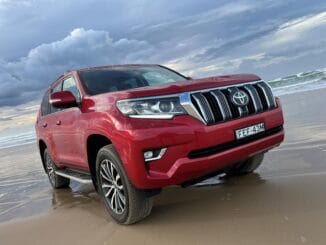
When you’re travelling through the bush, you need to head out with a sturdy set of wheels. A campervan or caravan is generally a good fit for digital nomads, as you can set up your work station securely from the comfort of your vehicle. The only question is do you buy an old van and fix it up yourself, or do you splurge on a newer ride that comes pre-fitted with comfortable amenities?
The right answer will vary from traveller to traveller, but a general rule of thumb is that your vehicle should be your biggest investment as a digital nomad. If you feel it may be safer to spend on modern amenities and safety features, then consider renting a caravan or perhaps even taking advantage of caravan finance to secure a newer vehicle for less. Just be sure to integrate the estimated cost of your vehicle repayments into your travel budget!
Map out your estimated monthly budget
While we’re on the topic of your travel budget, it’s important to keep in mind that your life as a digital nomad is reliant on you still maintaining a consistent income. Every campsite, takeaway coffee, and stop at the servo (petrol station), will require you to maintain access to funds, which means potentially setting up an Australian bank account with your employer.
With your financial channels set up, the next step is to estimate your monthly outgoings and compare with your anticipated earnings. Be sure to factor in essential costs like fuel, food, prescription medication, insurance (car, health, travel, etc.), and your network connectivity essentials (i.e. mobile phone plan and mobile broadband, like Starlink).
If your estimated monthly outgoings are higher than your anticipated earnings, then it’s best you know this before you head out on your travels. The solution may be adding a few extra hours to your working week, or even just reducing your expenditures elsewhere. Either way, you want to deal with any kinks in your budget well before you embark so that you can stay present while you go adventuring.
Consider vehicle fitouts, servicing, and maintenance
Before you head out on the open road, it’s imperative that you make sure you and your vehicle are up to the task. So once you’ve finalised your Australian driver’s license, registration, vehicle insurance and roadside assistance, it’s time to make a booking with your local mechanic for a pre-trip inspection and routine servicing.
Alongside changing your oil, checking headlights, and other basic tasks, it’s also vital that you assess your tyre pressure and tread before heading out. If you feel you could benefit from upgrading your tyres to a thicker tread for off-road driving, then make replacing your tyres a top priority to ensure ample time for securing a new set of four plus a replacement to store in your boot.
Once your vehicle is in tip-top shape and cleared for travel, it’s also well worth taking a second to look through your vehicle’s interior and determine if you may be in need of any other amenities across your fitout. Do you have a microwave, a kettle, and a toaster? Also, do you have an adequate number of powerpoints and USB points for all your devices? Do you have decent storage facilities for gas and water tanks? These are all questions you’ll need to ask and answer well before you hit the road.
Prep a climate-ready capsule wardrobe
Australia is a land of conflicting climates, in that we can have scorching summer days and bitterly chilly evenings no matter whether you’re in the highlands, in the desert, or by the coast. For that reason, the single most important piece of advice we can give to any international traveller is to pack smart. This means ensuring you’ve got breathable underlayers, warm and wind-resistant outerwear, plenty of sun protection (wide-brimmed hats, long sleeved tees and pants, and sunglasses!), and hiking-friendly shoes.
For base layers, we highly recommend breathable merino wool tees that can easily be layered with flannel shirts, jackets, and coats. Merino socks are also highly recommended for temperature regulation and odour control.
And of course, if you’re planning to jump on a Zoom call or two during your working week, you’ll definitely want to keep some collared shirts on hand to look presentable – from the waist up, at least!
Plan a general trip itinerary (with accommodation options!)
Finally, whilst it can be fun to set your sights on any direction in particular and travel spontaneously, it’s also well worth having a general directional itinerary in mind – especially if you’re looking to travel during peak travel seasons, where accommodation may be harder to book on the fly.
Thankfully, Australia boasts much natural beauty and supports many camping sites even in far-flung rural areas. From holiday parks to luxury cabins and villas, there are many options available when choosing where to spend the night.
Be sure to consider accommodation pricing, amenities and location when you look for an area to park your caravan or set up a tent for the night. Most importantly, book your stay in advance as spots in some campsites may get competitive. You don’t want to risk booking a Great Ocean Road beach camping site last minute in the summer, for instance!
Pro tip: if you are planning to take the unbeaten path during your time on the road, then be sure to check out our list of the best gear for remote camping trips to help you prepare.
Start planning your Aussie nomad life today
For international travellers and domestic travellers alike, seeing everything that our great island continent has to offer is guaranteed to take at least two to three lifetimes – so why not maximise the time you have by taking your 9-to-5 out on the open road?
Ultimately, a well-planned nomad life is as freeing as it is rewarding; optimising your plans for safety, convenience and cost will allow you to weigh anchor without worry. So long as you tick off these major logistical items we’ve outlined above, you should find yourself travelling comfortably no matter whether you’re out on the Nullarbor or camped by the Ningaloo.