
Solar Panels – If you live in a solar-powered home and now want to experience caravan travel and take solar panels along, it’s a different feeling. Solar panels on the surface are good, but once you start planning a caravan setup, you find that a lot of what you learned at home doesn’t carry over.
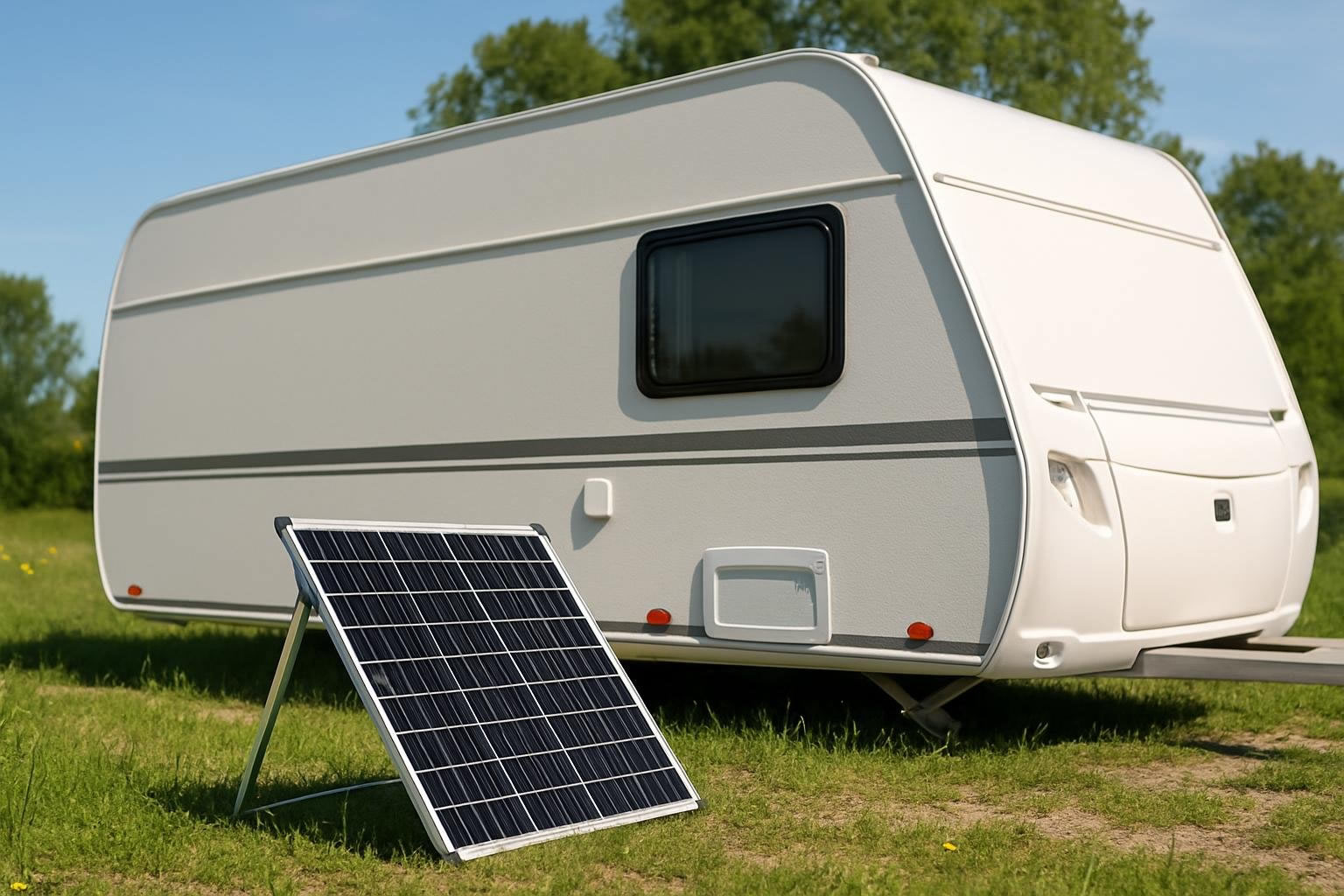
Here is a plain look at where the two differ and where they work the same way.
What stays the same
Panels use sunlight, and the sun is the same everywhere. Panels turn sunlight into electricity. Does not matter whether they are on the tiled roof or the caravan’s roof. Shading from trees, buildings, and other objects affects electricity generation.
Placement of solar panels is a matter of installation.
The size of the panel matters in both situations; the question is how much power you use.
In a caravan, you add up the fridge, lights, water pump, phone chargers, laptop, and anything else you run, then work out roughly how many watt-hours you need each day.
Heat affects solar panel performance because the panels lose efficiency when they get very hot.
Good solar power installation still counts. Poor connections, undersized cables, and cheap components cause trouble in either setting.
What changes
The system type
A solar system connected to the grid. When solar panels produce excess solar energy, it is exported to the grid, and you receive credit on your electricity bill. A caravan is an off-grid system. There is no network to lean on at night or on a cloudy day, so the battery is the complete safety net.
The voltage
Most caravans run on 12V DC. Panels connect to a solar charge controller, which charges a battery bank, and the lights, fridge, and pump run off that battery. A 240V inverter is only added for things like a coffee machine or a microwave. Most home systems run a high-voltage array into a grid-tied inverter with no battery at all, though battery additions are increasingly common.
The scale
A typical home system these days is in the 1-10 kW range or higher. A caravan setup is more modest, often using 200 to 600W of panels paired with 100 to 300 Ah of battery Capacity. Roof space and weight limit: what you can carry. Every kilo on a caravan roof counts, and so does every square meter of space.
The panels themselves
In solar panels, houses have fixed uses, framed panels, and are fixed to a roof at a set angle. On the other hand, Caravans have more options:
- Rigid panels mounted on the roof. These are durable and efficient but heavy.
- Flexible panels that stick to a curved roof. They are light, but they tend to run hotter and often don’t last as long.
- Portable folding panels that you set up beside the van and angle toward the sun. They need more effort, but they let you park in the shade while the panels sit in the sun.
The battery
Solar battery with solar panels installed in the garage or utility room. In a caravan, the battery copes with constant vibration, heat, and corrugated roads. Lithium (LiFePO4) batteries have become popular because they are lighter, can be discharged to a greater depth of discharge, and last longer than traditional AGM batteries.
They cost more upfront, though, and you need a charging setup that suits them, especially if you’re also charging from the tow vehicle.
Charging from the vehicle
Caravans often include a DC-DC charger so the battery charges from the car’s alternator while you drive. It’s a useful supplement when the weather turns, or you’re camped under trees. Homes have no equivalent.
Rules and rebates
The rules and rebates are titled differently for homes and caravans. The solar system in homes is installed by a CEC-accredited installer and connected to the grid, which is the basic eligibility criteria for federal incentives and rebates. With rebates, you also receive a feed-in tariff for exporting excess solar energy.
Caravan systems don’t connect to the grid, so there is no network approval and no export income. Rebates for fixed, grid-connected systems generally don’t apply to mobile setups.
Caravan wiring also falls under its own set of electrical rules for transportable structures, so it pays to use someone who knows caravans and to have the work done properly if you aren’t confident yourself. Poorly done 12V wiring is a real fire risk.
Tilt and direction
A home array is mounted once and – at – a caravan moves. You’ll be facing a different direction at each campsite, and the roof is flat. Flat panels still do the job, but they produce less in winter and at higher latitudes than tilted ones. That’s one reason travellers like portable panels. You can aim them, and in Tasmania or Victoria in July, aiming makes a real difference.
Maintenance and wear
A home system needs a clean now and then and a check-up every few years. A caravan system lives with dust, bird droppings, tree sap, sun, rain, and bumpy roads. Check the cable entry points for water, the mounting for loose fittings, and the connectors for corrosion every so often.
How to decide what you need
If you’re thinking about a caravan with solar, just start with a list of what you plan to run each day and how long you plan to run it. You can get help from trusted solar installers like Solar 365.
Work out roughly how many watt-hours that adds up to. Then look at how much sun you’ll realistically get, remembering that winter days are shorter and there are cloudy stretches. That gives you a sensible figure for both panels and battery.
For a home, start with your bills. Look at when you use the most power, whether you’re home during the day, and what the network will pay you for exports.
The technology is the same, and the thinking is quite different. A home system is about reducing your bill over many years. A caravan system is about independence on the road, being comfortable at a campsite without a power point.
Be the first to comment